
Hamilton Neighbors and Block Sources
Hamilton neighbor research starts with the block, not a promised list of occupants. The Hamilton Auditor GIS Near Me tool identifies nearby parcel pins, situs fields, mailing fields, and approximate distance. The Hamilton Recorder route then helps connect a parcel’s legal description to named parties in an instrument. Hamilton City GIS supplies ward, precinct, neighborhood, historic-district, zoning, flood, and boundary context. These are useful Hamilton block facts, but none turns public records into a roster of everyone next door.
| Local source | What it reveals around an address | Access and boundary |
|---|---|---|
| Hamilton Auditor GIS Near Me | Nearby parcel PINs, situs, mail fields, and approximate distance | Public Hamilton map feature, not proof of a person’s occupancy. |
| Hamilton Auditor parcel profile | Owner display, tax-bill mail, legal description, transfer, and parcel facts | Public record; owner and recipient can be different people. |
| Hamilton Recorder and plat indexes | Legal chain, lot or subdivision, and named instrument parties | Recorder does not conduct a title search. |
| Hamilton City GIS and 17Strong | Precinct, ward, neighborhood, historic, or zoning context | Hamilton context and civic contact framework, not a membership roll. |
| Ohio voter access for Hamilton | Individual registration confirmation and law-governed list access | Not a streetwide Hamilton neighbor roster; protected information is omitted. |
The key Hamilton distinction is owner versus occupant. A Hamilton parcel record can identify the tax-listed owner and a correspondence address. The mailing address may belong to a Hamilton estate, company, agent, or owner who does not live at the parcel. A Hamilton Recorder result identifies a party to a legal document. Neither result proves that person is one of your current Hamilton neighbors, and neither identifies every member of a Hamilton household.
Note: Each block source answers a parcel or civic-context question, but none authorizes treating a nearby address as a list of residents.
Hamilton Neighbors Through GIS Near Me
Use the Hamilton Auditor Address Search to find the anchor parcel first. Enter the Hamilton street number and street name without a suffix. If needed, a Hamilton street-only or wildcard search can return matching addresses. Confirm the PIN in the Hamilton GIS viewer, then open the Near Me view and use its Current Parcels (Proximity) output. The documented fields are PIN, LOCATION, MAILNAM1/2, MAILADR1/2/3, and approximate distance. Record the nearby Hamilton PINs and locations, then return to the individual Auditor profiles instead of guessing from the map label.
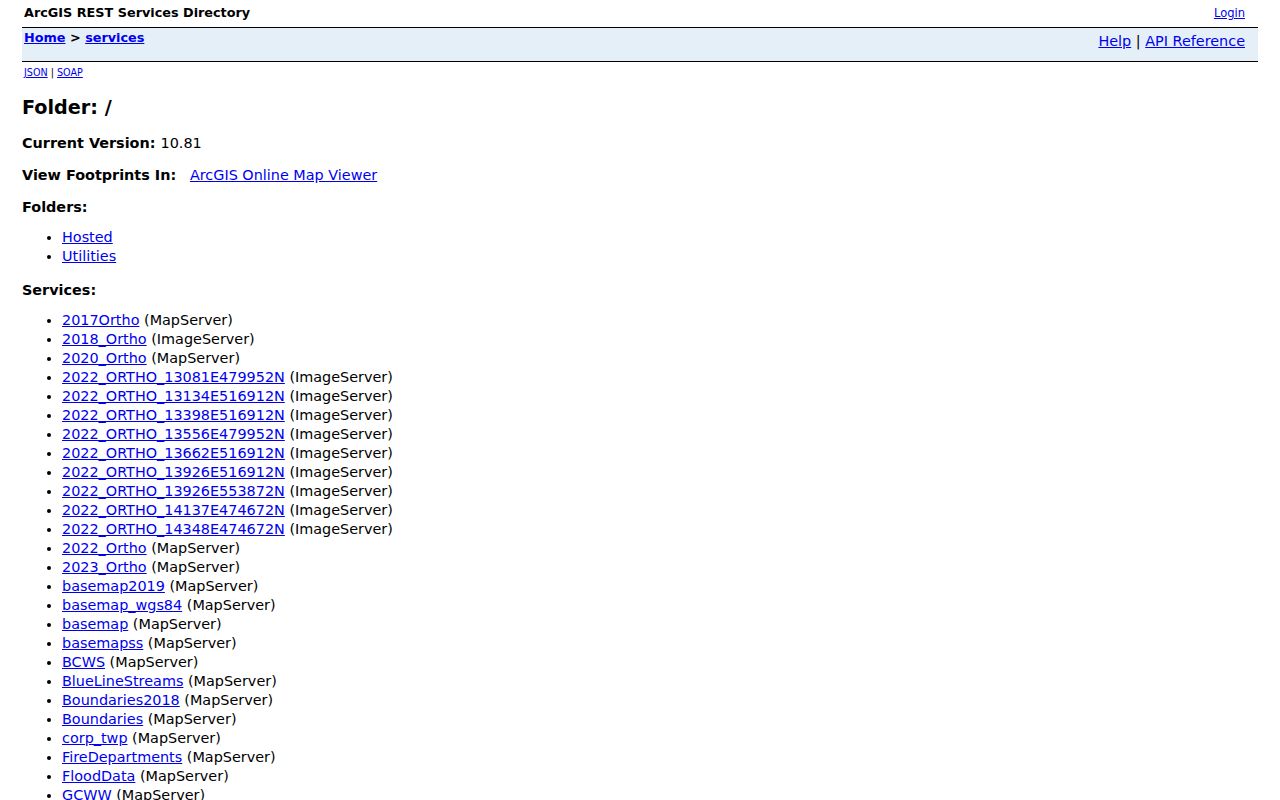
The public Butler County Auditor GIS services are shown in this captured image.
The Hamilton map is a parcel tool. It is not a legal survey or a social map of the people living around a Hamilton address.
Note: Save the nearby parcel PIN and approximate distance before leaving Near Me, then confirm each record through its own Auditor profile.
Hamilton Neighbors and 17Strong
Hamilton’s official Neighborhoods and 17Strong pages identify 17 Hamilton civic areas: Armondale, Central Business District, Dayton Lane, East End, Enterprise Park, German Village, Highland Park, Jefferson, Lindenwald, Millikin, New London, North End, Prospect Hill, Riverview, Rossville, Taft Place/Governor’s Hill, and Washington. The Hamilton framework links residents and City Hall, and Hamilton meetings are listed on a changing City schedule. It is useful for understanding the Hamilton civic area around an address or finding a public meeting channel.
| Hamilton civic channel | What is published | What is not established |
|---|---|---|
| Hamilton City Neighborhoods | Named civic areas and City-facing neighborhood information | A household or member directory |
| Hamilton 17Strong Advisory Board | Connection between neighborhood areas and City Hall | A private contact roster or block-watch list |
| Hamilton City records channels | Historic agenda or minute requests when a specific record exists | A newly created list of residents for a block |
This City of Hamilton Neighborhoods capture shows the official starting point.
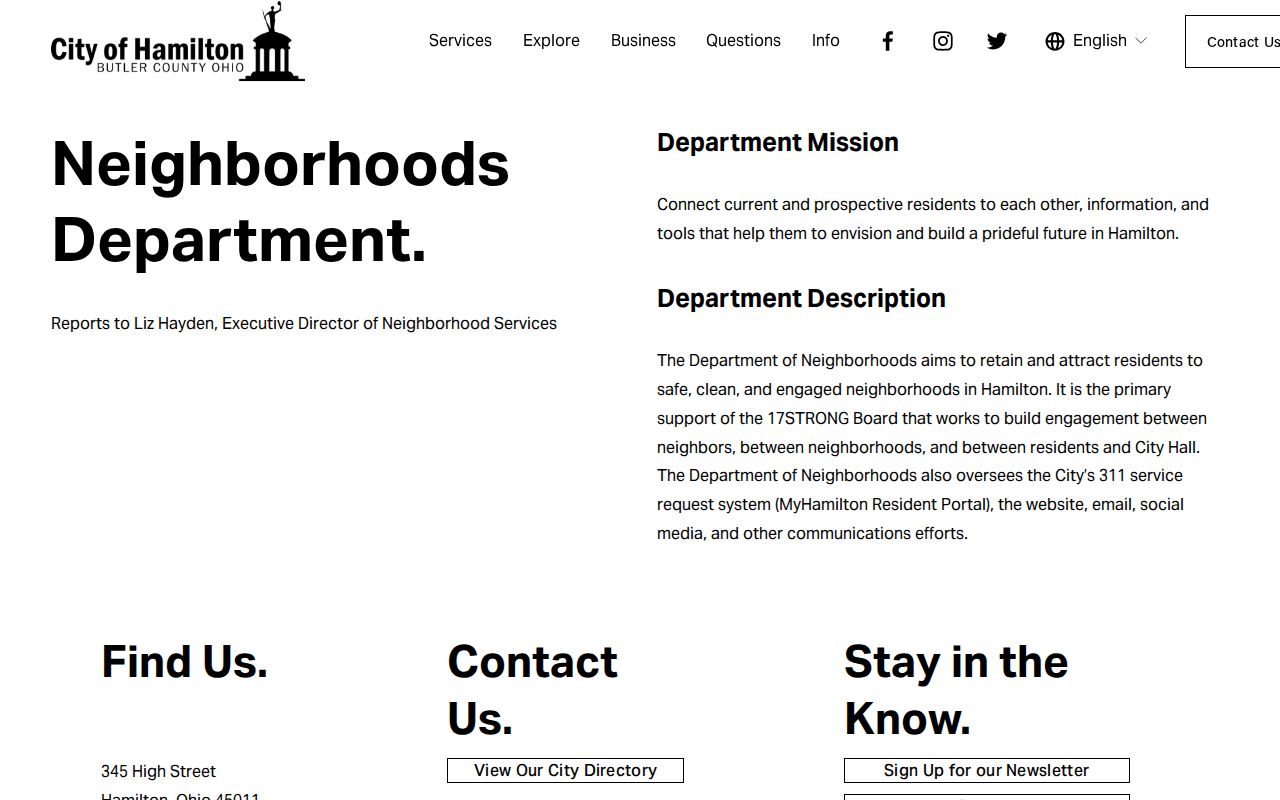
Hamilton’s neighborhood geography offers a better way to identify civic context than assuming a private association maintains a public roster.
A Hamilton Map Is Not a Neighbor Roster
Myth. A Hamilton neighborhood layer, ward boundary, or parcel cluster does not reveal who belongs to a group or who lives in a home. Hamilton’s City GIS layers can show neighborhoods, wards, precincts, zoning, historic districts, municipal boundaries, schools, and flood or district context. That makes them valuable for deciding which Hamilton public office or rule may touch the parcel. It does not identify Hamilton residents, association members, or private contact details.
The research did not find an authoritative Hamilton City directory of individual neighborhood members, HOA members, block-watch participants, or resident contacts. That is a Hamilton privacy boundary, not a gap to fill with a commercial neighbor-lookup category. For old Hamilton municipal discussion, direct a precise request for an agenda or minute to City records channels and describe the meeting or date range.
Note: A ward, precinct, or neighborhood boundary provides Hamilton context, not a claim that a person belongs to a group.
Map Hamilton Neighbors by Parcel
The Hamilton adjacent-parcel method keeps a block search grounded in records that can be checked. It moves from the Hamilton address to the physical parcel, then from each nearby parcel to its own tax and legal record. Use the same Hamilton legal description, subdivision, or lot information when moving into Recorder records. This prevents a similar Hamilton street name or owner name from pulling the search onto the wrong lot. For a full named-street chain rather than the immediate block, use the Hamilton street directory.
- Find the Hamilton address in Butler County Auditor Address Search and note its PIN, situs, legal description, and recent transfer clue.
- Confirm that Hamilton anchor PIN in GIS, run Near Me, and record each nearby PIN, location, and approximate distance.
- Open the Hamilton parcel profile for each nearby PIN. Preserve the owner display and tax-bill mail as separate fields.
- When a Hamilton historical or ownership question remains, search Recorder parties or the legal-description path. Do not infer occupancy from a parcel result.
A sensible Hamilton flow is address to anchor PIN, anchor PIN to nearby parcel PINs, parcel PIN to Auditor profile, then legal description to Recorder history. Stop at the Hamilton fact the record supports. A Hamilton deed can trace a legal interest, while a tax record can show a listed owner or mailing destination.
Hamilton Neighbors Are Not a Voter List
The official Ohio voter tool for Hamilton is an individual-confirmation route. It requires first name, last name, and county, then may ask a broad-match user to select a Hamilton street. It is not a Hamilton street browser. A Hamilton no-match can reflect spelling, a former name, a move, cancellation, or confidentiality. The Butler County Board of Elections is the Hamilton local office for precinct questions and law-governed records access.
ORC 3503.153 governs the Hamilton public display of certain registration details, including name, birth date, current residence address, precinct, registration date, voting history, and last activity date. That Hamilton voting history reflects participation, not ballot choice. ORC 3503.13 protects Social Security, driver or state-ID, telephone, email, Safe at Home information, and other confidential data. Hamilton public inspection rules also limit copied list entries to name and address, with a temporary copying limit around an election if copying interferes with preparation.
Hamilton Neighbors in Block History
For Hamilton block history, use the address as a starting point and keep the evidence in date order. The Hamilton Recorder’s historical geographic indexes, plats, inlots, atlases, and annexation records can explain a lot or subdivision change. Hamilton Lane Library’s Cummins Local History Room adds directories, yearbooks, maps, atlases, and newspapers. A Hamilton city directory can place a listed household at an address in its publication year, but it has publication lag and gaps. Hamilton Sanborn maps show structure and block use, not private household membership.
The City’s historic-property resource appears in this source capture.
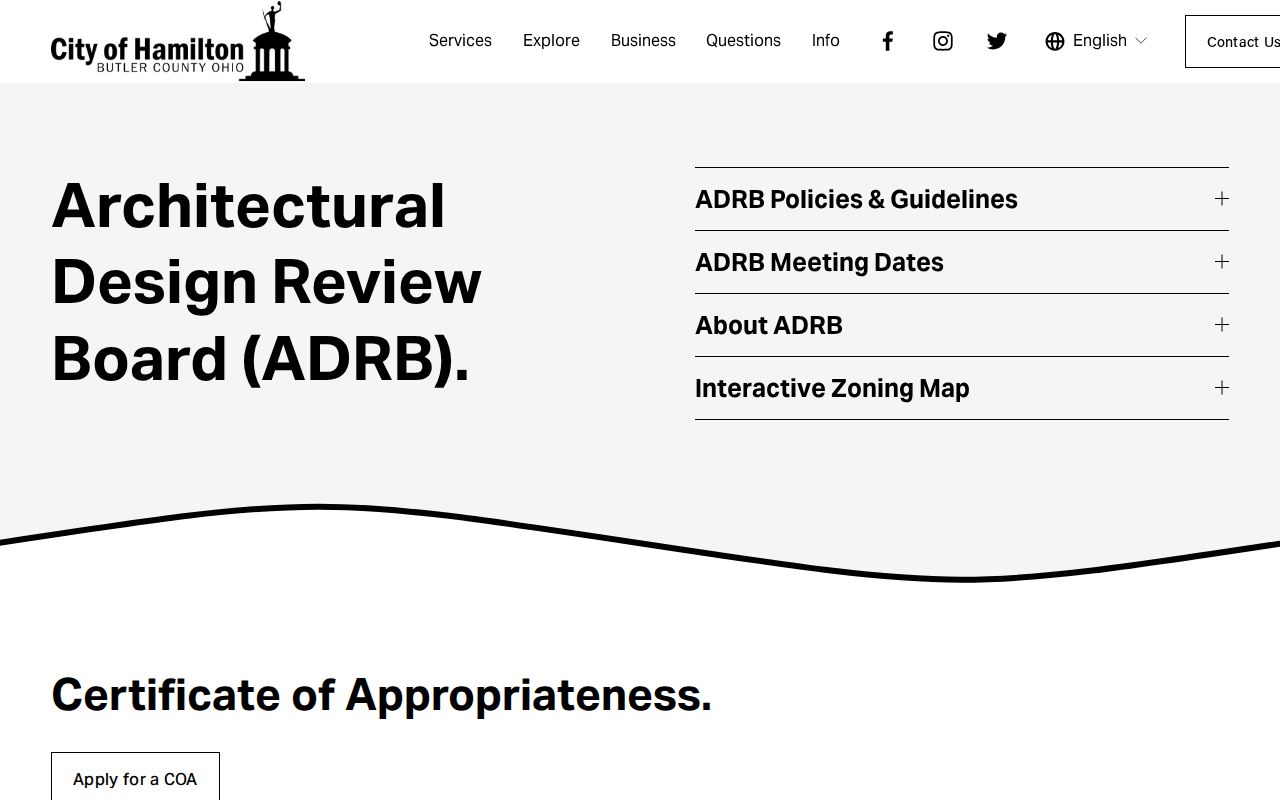
Historic-district and architectural material adds context for an address, while the Recorder and library sources supply the records needed for dated research.
Hamilton Neighbors and Property History
Insider tip. When a past Hamilton block question reaches a gap in online directories, use Lane Library Local History & Genealogy rather than guessing from a current Hamilton parcel display. Its research form has a dedicated Property History route. Give Hamilton Lane staff the address as it appeared at the time, any old street name, a two-to-five-year window, and a surname, spouse, or another dated name anchor. Those details help distinguish a missing Hamilton directory year from a changed address form.
The response can point to local directories, maps, newspapers, yearbooks, photographs, or another historical holding. Treat that material as dated block context. A directory line may identify a listed household for its publication year, while a parcel record and deed chain answer different questions. Keep the publication date, document number, and address form beside each result before connecting it to Hamilton neighbors today.
Note: A Property History request is most useful when it names one address and time window instead of asking Lane staff to assemble a resident list.
Hamilton Neighbor Sources Compared
Official records and commercial neighbor-lookup products answer different questions. A public source gives a named custodian, a known record type, and a route for confirming an error. A commercial category can blend old and mismatched data without showing when the underlying fact changed. For neighborhood curiosity, civic participation, family history, or a scam concern, use the official source first and check the date beside the result.
| Approach | Useful for | Limit |
|---|---|---|
| Auditor and GIS | Parcel location, tax-listed owner, and surrounding lots | Does not prove occupancy or household membership. |
| Recorder and plat records | Legal parties, documents, lots, and subdivision continuity | Does not supply a complete title opinion or resident list. |
| City neighborhood resources | Civic area, meetings, and government context | Does not publish private association or household rosters. |
| Commercial neighbor tools | A lead that still needs checking | May mix inaccurate or outdated information and lacks custodian authority. |
For a specific address, the Auditor and Recorder provide the clearest starting facts because each result can be checked against a parcel, document, or legal description. City resources add civic context. If a result conflicts with an official record, preserve the official record number and ask that custodian about the discrepancy.
Hamilton Neighbors in City Records
A city-hosted Hamilton neighborhood reference was captured for the local image set. Treat City materials like this as context for public projects and civic geography, not evidence about individual neighbors. For a record request, identify the specific City department, project, meeting, or address range. Ohio’s Public Records Act requires access to existing public records, subject to exemptions, but does not make a public office create a new block list.
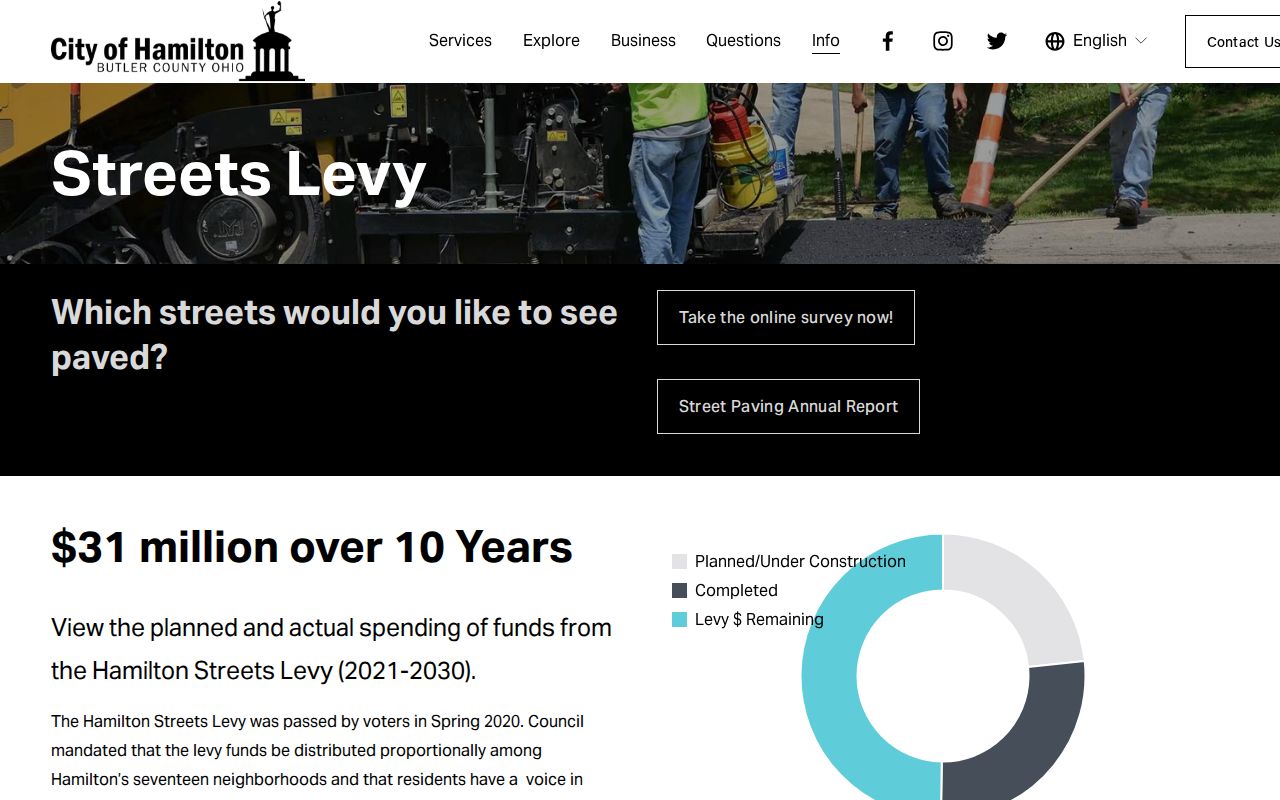
Using an existing City record by its title and date is more reliable than broad requests that ask staff to assemble a new set of personal data.
Note: City records requests work best when they identify a department, meeting, project, parcel, document, or narrow date range.
Privacy Limits for Hamilton Neighbors
Some facts around a block are not public, and a public record can be partly released with protected details removed. Ohio Safe at Home protects the address information of qualifying participants. Voter law excludes protected registration information. Court sealing and redaction rules, BMV restrictions, and record-specific privacy rules remain in force. Ohio has no universal government portal that deletes all resident information, but an inaccurate official record should be taken to the originating custodian with the correct document or record number.
Lawful use. Use Hamilton block records for personal, lawful purposes such as getting to know civic context, family history, property curiosity, or scam checking. Never use them to watch, harass, intimidate, or harm another person.
ORC 2903.211 addresses menacing by stalking, and ORC 2917.21 addresses specified harassing communications. If a message cites a court-like fact and demands fast payment, independently find the agency’s official phone number rather than responding through the message. A records concern belongs with the custodian that holds the parcel, document, court, or City record.