
Finding Hamilton Residents
Hamilton has no public master list of residents. The useful starting point for a Hamilton search depends on the question. The Butler County Auditor Property Search is strongest when a person may own a Hamilton parcel. The Hamilton Recorder identifies parties to deeds and other recorded instruments. The Ohio voter tool tests one person’s registration, while Hamilton Lane collections preserve historic household clues. Each Hamilton result is a lead, not a blanket claim about everyone at a Hamilton address.
Keep Hamilton ownership, mailing, and occupancy separate. An Auditor card can show a parcel’s situs and a Hamilton tax-bill mailing field, but the mailing address may belong to an agent, business, estate, or owner elsewhere. A deed names legal parties, not every occupant. For a historical Hamilton result, a directory’s publication date gives an observed point in time, not a guaranteed arrival or departure date.
- Search an exact or variant name in the Hamilton Auditor system, or begin with a full Hamilton street address when the parcel is known.
- Save the Hamilton parcel ID, situs address, Hamilton legal description, transfer date, and separate tax mailing field before drawing a conclusion.
- Use the Butler County Recorder Official Record Search for the Hamilton party, date, document number, book/page, or legal description.
- For a narrow civic check, use the Ohio voter lookup for Hamilton, then ask the Butler County Board of Elections about its records channel.
- When the period is older, compare a Hamilton Lane directory or newspaper with a deed, map, or census record. Request a named existing record from its custodian when no online result appears.
Note: A missing result can reflect spelling, a changed address, a protected Hamilton record, or a portal’s scope rather than proof a person was never in Hamilton.
Hamilton Resident Records Offices
Hamilton is the Butler County seat, so the Recorder and Auditor are both at 130 High Street. Their Hamilton records complement each other. The Hamilton Auditor organizes parcel and tax information, while the Hamilton Recorder preserves recorded real-estate instruments. A Hamilton court, health department, election office, or library has a different role. Select the Hamilton office that created the item rather than asking one custodian to assemble a new resident list.
Butler County Board of Elections
Individual registration tool
Ohio statewide service
Check current office contact
Hamilton Parcel Search Fields
The Hamilton Auditor’s search is a practical Hamilton residents directory starting point for Hamilton property questions. Owner mode expects LastName FirstName, without a comma, and accepts partial names and the * wildcard. Address mode takes a Hamilton street number and street name without the suffix, and a street-only query can return matching Hamilton addresses. Parcel mode accepts all or part of the number; most Hamilton parcels have 14 characters, while manufactured homes are usually eight.
| Auditor field | How it works |
|---|---|
| Owners | Hamilton last name then first name, full or partial, with wildcard support. |
| Address | Hamilton street number and street name, without a suffix; street-only browsing is available. |
| Parcel | All or part of a Hamilton parcel number; wildcard searching is supported. |
| Map and sales modes | Useful Hamilton pivots after identifying the correct property rather than proof of an occupant. |
The Auditor owner-search screen shows the name, address, parcel, map, sales, and advanced routes available for a Hamilton property search.
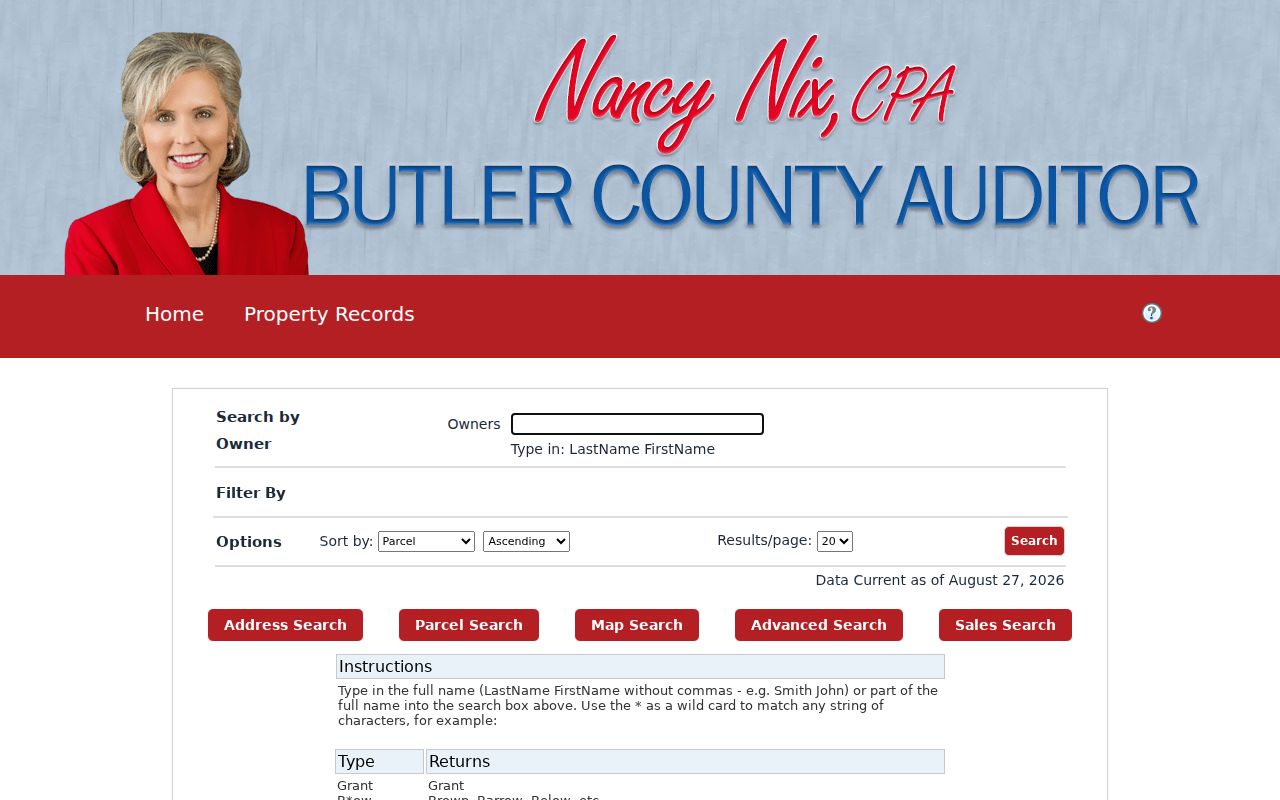
Use the screen to start a documented parcel trail, then read the returned card carefully for the distinction between situs and mailing information.
Hamilton Deed Index Paths
The Hamilton Recorder’s search provides another Hamilton resident records trail when a Hamilton parcel or party is known. The Hamilton portal can search indexed fields or index plus full document OCR. Its advanced controls include party names, recorded-date range, document type, document number, book/page, full text, and city, subdivision, township, or condominium legal controls. OCR is useful for discovery, but the image and indexed fields remain the check on an OCR hit.
Hamilton’s historic route has more than one door. Documents from 1987 forward are indexed and imaged, while older work can use book and page. The Recorder also maintains pre-1987 geographical indexes, alphabetical grantor/grantee indexes, historical books, atlases, and annexation materials. The 1803–1876 Red Books are arranged by surname initial with separate grantor and grantee sections. That detail can save a false negative in an early Hamilton deed trail.
The Recorder quick-search interface is the official entry to the modern index and documented OCR options.
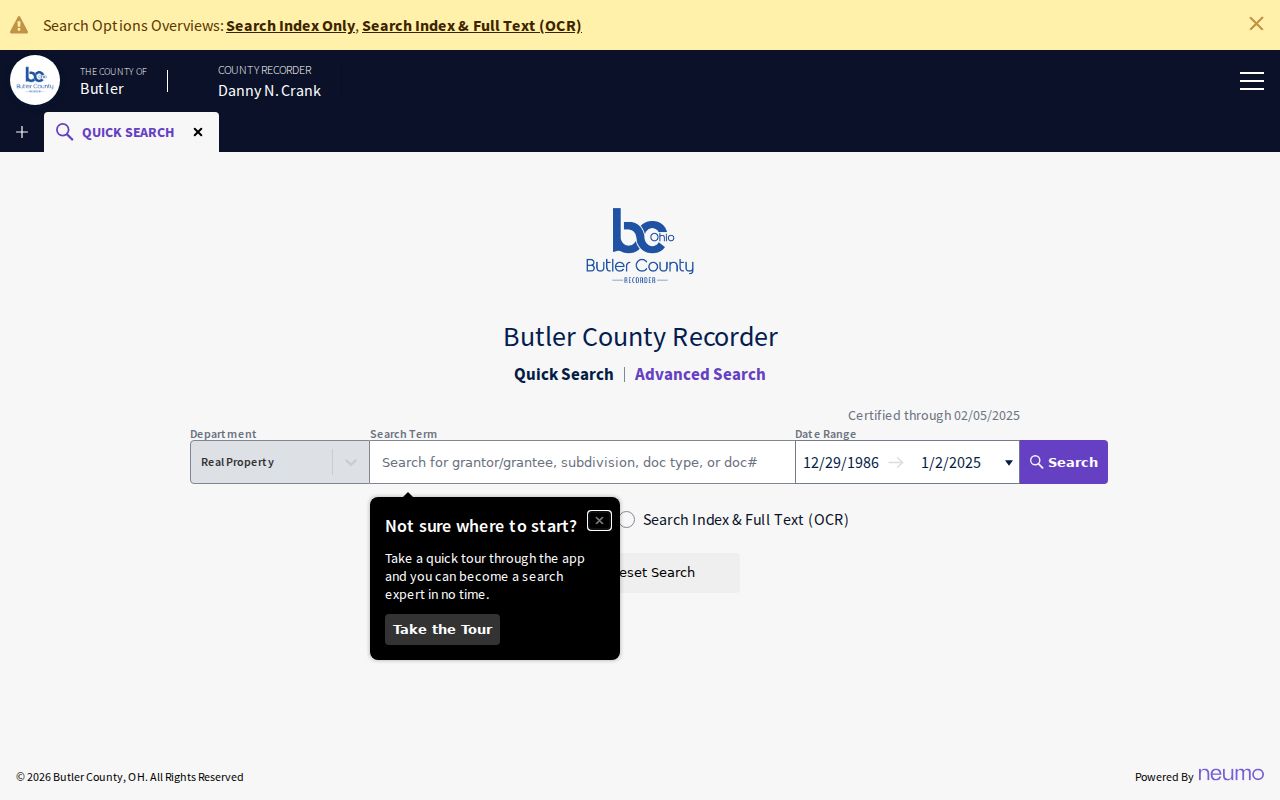
The Recorder reports that its imaging project is complete, but a failed display should be taken to the office before treating a record as absent.
Note: A failed Hamilton image may need an office email or counter inquiry; it does not establish that the original document is absent.
Hamilton Record Terms in Plain Language
Hamilton records often use short labels that describe a document or property relationship rather than a household. Reading those Hamilton record labels literally makes a Hamilton residents directory search more accurate.
- Parcel
- A tax and mapping unit for Hamilton real property, identified in the Auditor system.
- Situs address
- The Hamilton location of the parcel, which differs from the tax-bill mailing address.
- Index
- A Hamilton finding tool that points to a record; it is not always the document image itself.
- Criss-cross directory
- A historic street section that organizes listed properties by address rather than alphabetically by name.
These terms matter most when a Hamilton name lead turns into a property trail or an old Hamilton address turns into a library search.
Current Hamilton Resident Directories
Current directory-like records in Hamilton each show a narrow slice of activity. A Hamilton property roll is best for a tax-listed owner and parcel. A voter tool is an individual-registration check. Hamilton recorded documents identify parties to a transaction. Court and probate systems may document a case or estate, subject to their access rules. None should be read as a full household list.
| Source | Who It Lists | Keeper | Access |
|---|---|---|---|
| Auditor property roll | Tax-listed owners and parcel facts | Butler County Auditor | Public web search and counter |
| Individual voter lookup | Registration and precinct status | Ohio Secretary of State / BOE | Individual lookup; protected records excluded |
| Recorded-document index | Grantors, grantees, and instrument parties | Butler County Recorder | Public online index, images, counter, and email |
| Court and probate records | Named party or estate appearances | Separate courts and clerk | Jurisdiction-specific portal and copy channels |
| City directories and yearbooks | Historic listed households and context | Lane Libraries | Digitized volumes, Cummins Room, or research request |
When the aim is to identify one person across sources, use the Hamilton resident lookup process to anchor the name to a parcel, case, registration, or dated directory entry before comparing records.
Hamilton Residents Directory Sources
Official Hamilton records and commercial listing services serve different purposes. A county or city custodian can explain what its own record means, identify the date attached to it, and provide a request path when a public item is not online. A commercial listing can be a starting lead, but it may combine stale, mismatched, or incomplete data from sources with different update cycles. For a Hamilton residents directory search, treat the official record as the document to verify.
| Research need | Official Hamilton route | What to confirm |
|---|---|---|
| Parcel connection | Butler County Auditor owner, address, or parcel search | Situs, owner line, parcel ID, and separate tax mailing field |
| Recorded transaction | Butler County Recorder index and document image | Party role, instrument type, recording date, and document reference |
| Historic household clue | Lane Libraries directory collections and local-history staff | Publication year, printed address, and entry abbreviations |
Use a public-records request, an office counter, or library assistance when a named existing item is not searchable online. None of those records creates a complete roster of everybody in a Hamilton household.
Note: A Hamilton custodian can explain its own record’s scope, but it cannot combine unrelated sources into a new resident list.
Hamilton Voter Lookup Limits
The state voter lookup is a narrow Hamilton resident lookup, not a citywide roll for casual browsing. It can test an already narrowed Hamilton identity and return registration or precinct information through the Secretary of State service. Ohio voter records are governed by ORC 3503.15, with confidentiality exclusions under the Public Records Act. Ballot choices are not public, and protected Hamilton registrations are not displayed.
For date-specific research, Ohio’s DATA Act voter portal retains daily county snapshots for at least 22 months. That can help distinguish today’s lookup from a prior observed date, but it does not erase confidentiality rules. The Butler County Board of Elections is the local access channel for precinct and election-record questions.
Note: A no-match can result from a move, a spelling variation, cancellation, or protected status, so it is never conclusive proof about Hamilton residence.
Hamilton Court Search Choices
Choose the court before trying a name. Hamilton Municipal Court CaseLook is the city court route. The Butler County Clerk of Courts handles Common Pleas, domestic-relations, and related clerk functions, while Probate handles estates, wills, guardianships, and marriage work. Butler County Area Courts use their own CaseLook. An online court entry can identify a party, case number, event, or docket date, but it does not establish a current residence.
Electronic Common Pleas cases are listed by the Clerk as 2000 to present; older files are at the Records Center. Municipal Court warns that online information can lag at least 24 hours. Ask the correct clerk for a verified copy or inspection, and do not pursue juvenile, sealed, expunged, adoption, or protected family material as an ordinary public lookup.
The Hamilton Municipal Court search entry makes the court’s verification warning visible before a user relies on online information.
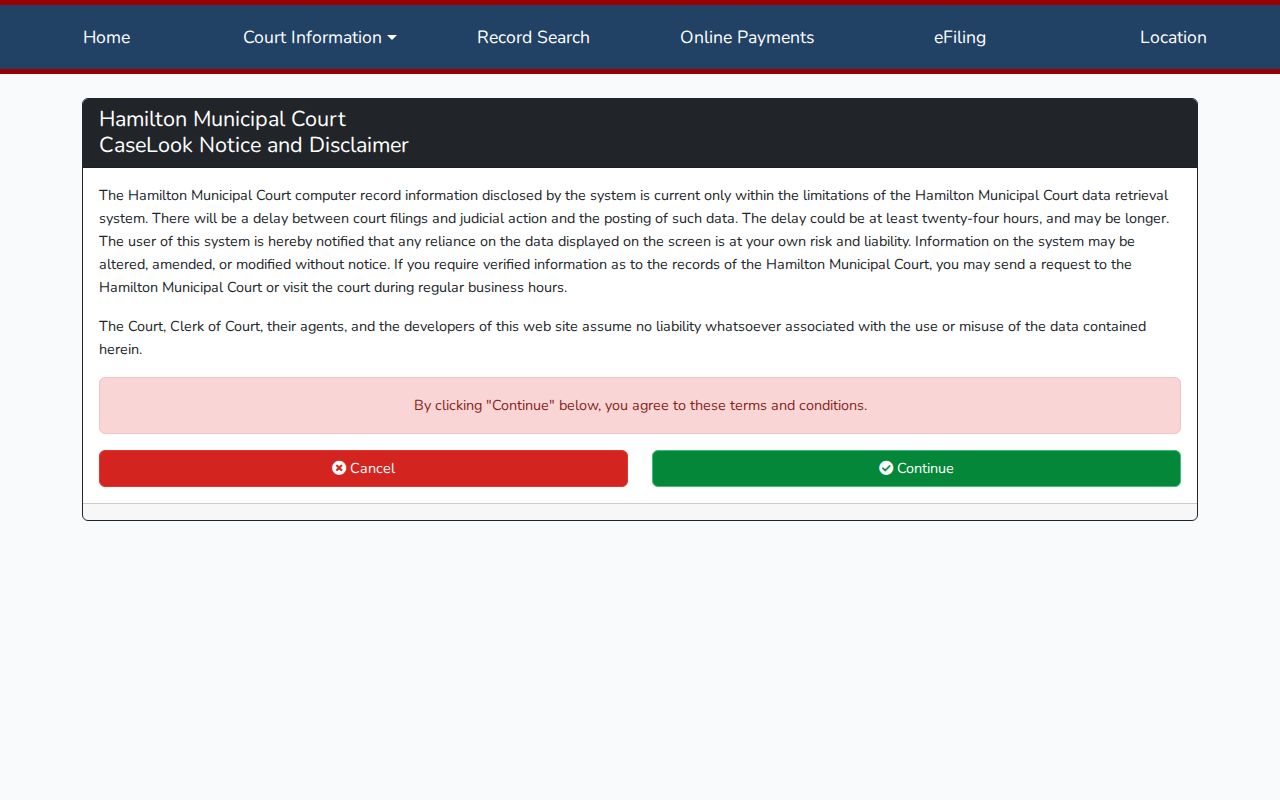
The image belongs in a court-specific workflow, where the court name and case number are preserved for a later clerk request.
Hamilton Public Record Requests
When a needed Hamilton record is not online, Ohio’s Public Records Act, ORC 149.43, allows any person to request an existing record from a public office. Hamilton inspection is generally prompt, copies come within a reasonable time, and an office must identify its authority when it denies or redacts material. The law does not require a custodian to create a new list, conduct research, or expose exempt information.
The City accepts oral or written requests, but enough detail is needed to locate and review the record. Its policy lists ordinary paper copies at five cents per page plus actual delivery cost. Direct the request to the department that created the record, state the record and approximate date range, and use the City Records Commission materials when a form helps narrow the request.
Hamilton’s Records Commission page links the release policy, optional request form, and department retention schedules.
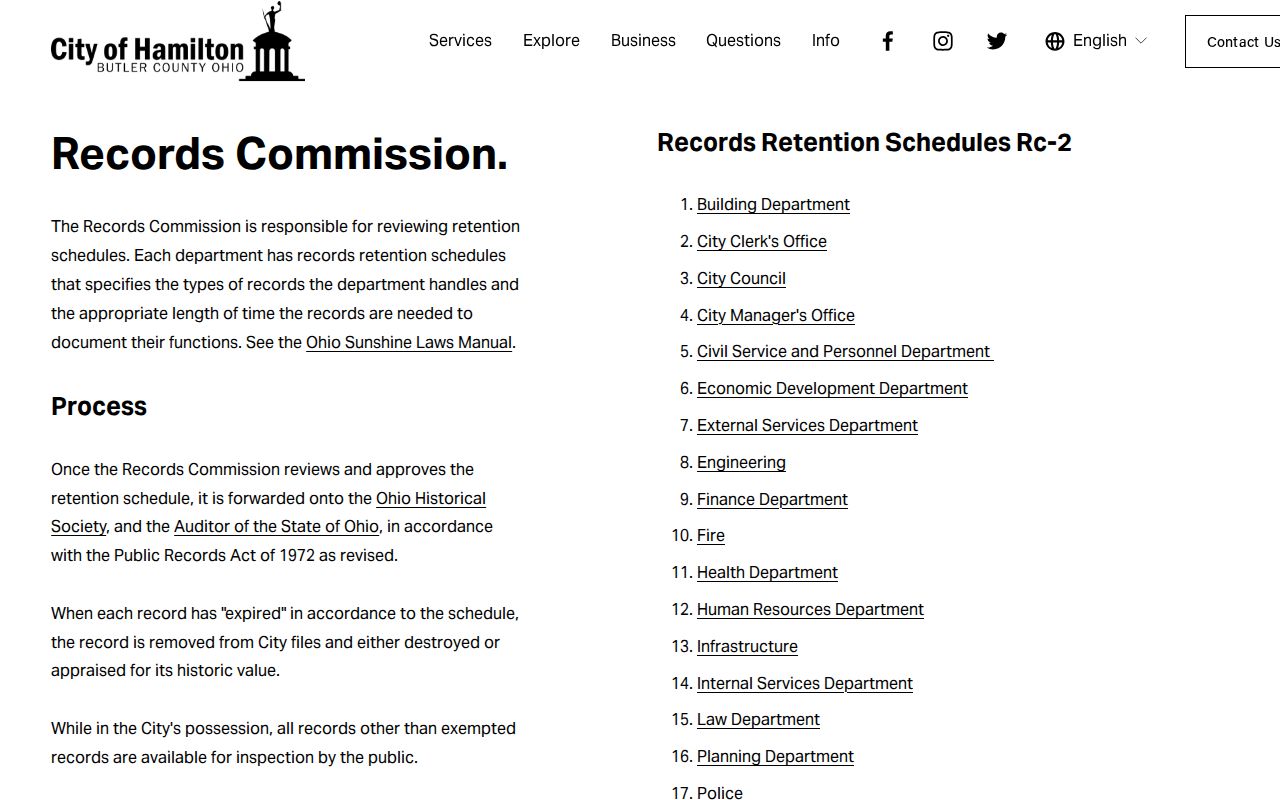
Retention schedules also explain why an older search can move from an active department to the county Records Center or a local-history collection.
Hamilton Residents Directory History
The historical Hamilton residents directory shelf is unusually strong. Lane Libraries’ fourth-floor Cummins Local History Room holds directories, yearbooks, maps, atlases, local newspapers, and genealogy material. Its digitized Williams’ Hamilton run includes verified volumes from 1858–59 through 1975, with real gaps, including no verified volume in the online set for 1925–1953. Use the stated year, not an assumed annual run.
A directory entry can give a listed name, spouse notation, occupation, employer, and residence notation. The street portion, often called a criss-cross directory, groups numbered properties and may note a business, vacancy, rear address, or intersection. For an older address, compare the directory with a deed, a census period, a newspaper, or the 1899 Sanborn map. The full holdings and reading method are on the Hamilton city directory page.
The Cummins Local History Room is a local in-person and staff-request fallback when the online directory years are incomplete.
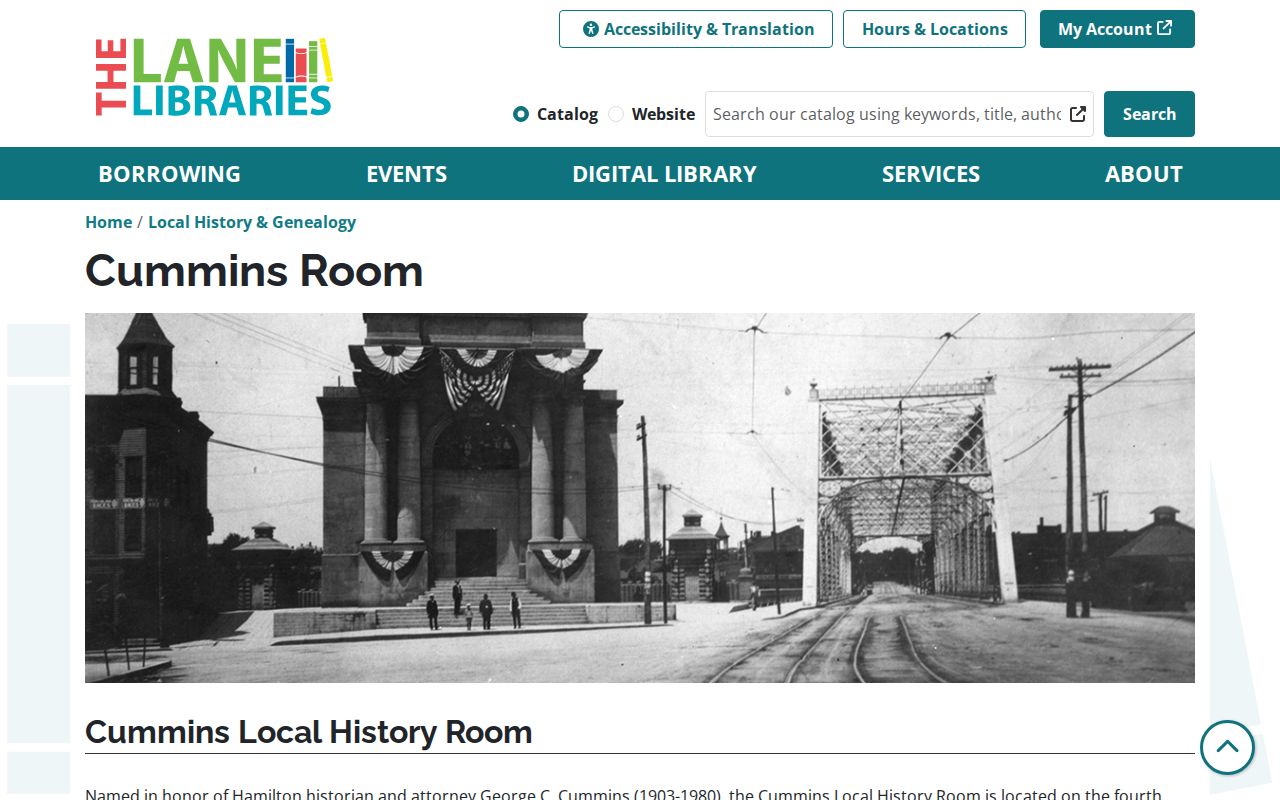
The collection began in 1983 after historian George C. Cummins’s family donated materials, a local story that helps explain its unusual mix of photos and directory resources.
Note: A Hamilton directory year records a publication point, so use a second dated source before assigning a household arrival or departure.
Hamilton Address and ZIP Checks
A Hamilton address may carry a postal ZIP that does not match a simple city-name assumption. The City Street Index gives exact number ranges, side or parity, and ZIP, while USPS confirms final delivery. The distinction matters near the edges of 45011, 45013, 45014, and 45015, and for the special 45012 row at 10 Journal Square. An address has separate postal, municipal, parcel-situs, and tax-mailing meanings.
Use the exact house number in Hamilton first. Belle Avenue, S. Erie Boulevard, and Tylersville Road all have documented parity or number-range splits. Once a ZIP narrows a Hamilton area, move to a parcel or street search rather than treating Hamilton postal geography as a people list. The Hamilton ZIP directory retains the range detail and postal cautions.
Hamilton Safety and Privacy Boundaries
Public access has firm limits. Ohio Safe at Home gives eligible participants a substitute address, and confidential identifying and address information is excluded from public disclosure. Medical, adoption, protected personal identifiers, driver data, and some court material have separate restrictions. A record correction starts with the office that keeps the specific document or record number, not an unrelated office.
For the access rule itself, consult ORC 149.43 before asking a Hamilton custodian for an existing record.
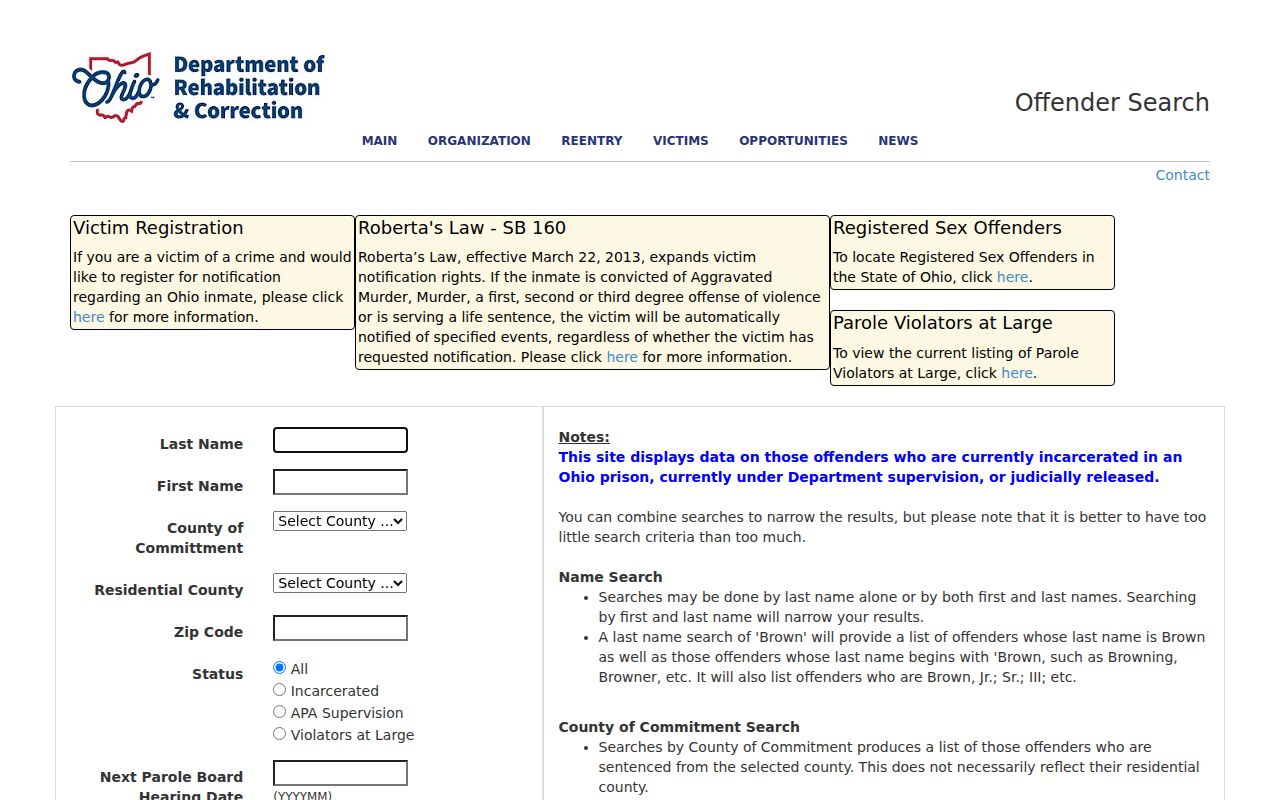
ORC 149.43 is the controlling access statute, but its text and the relevant custodian determine what can actually be released.
For an official custody search, distinguish Butler County current-custody channels from the Ohio Department of Rehabilitation and Correction search, which covers state custody, supervision, or judicial release. A result in one system is not a full criminal history, address record, or safety finding.
The ODRC official search screen separates state corrections searching from local court and property records.
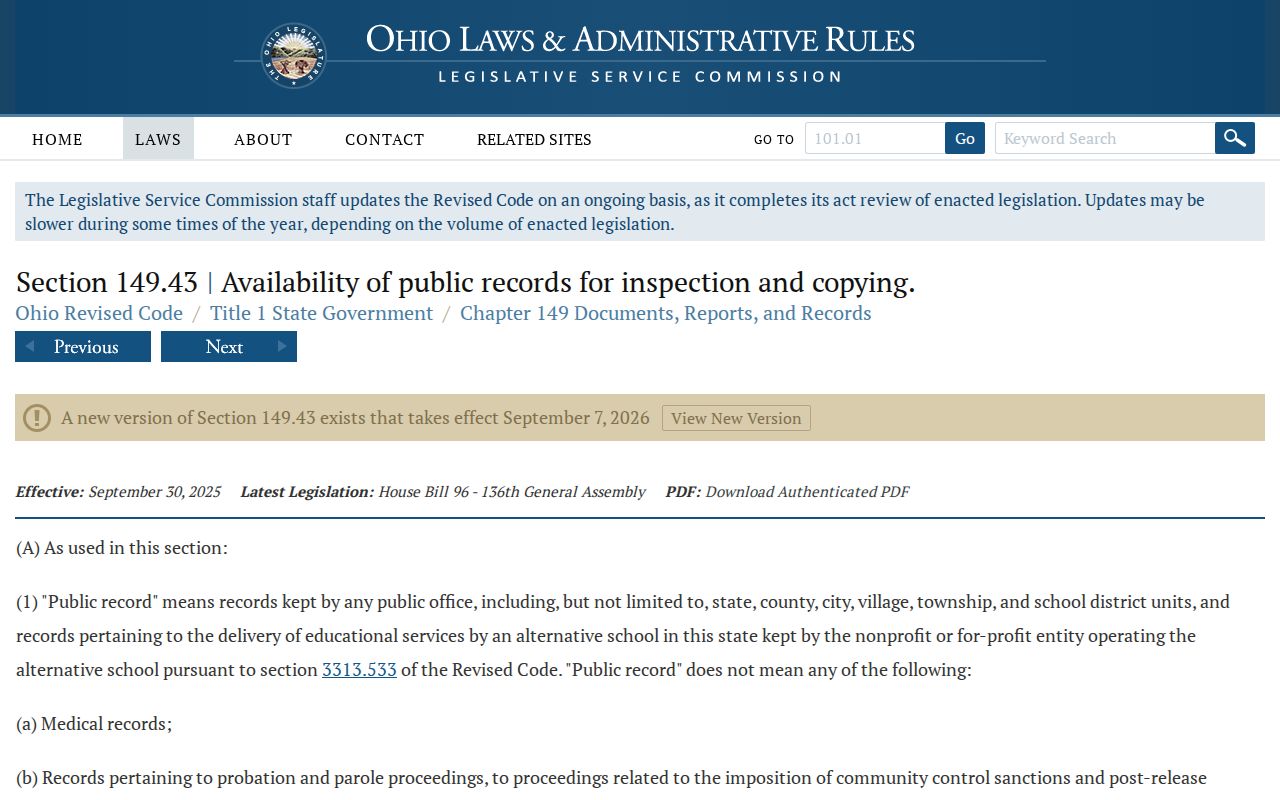
Search results must be read within the agency’s scope and never used to draw a conclusion that the record does not state.